Evolution and Environment

Primitive vs Advanced.

“primitive” is usually used to describe something old, but is better used to describe traits that are close to the origin or ancestor.

A species cannot be primitive, but is rather a mix of primitive and advanced traits.

An example being human hands, which have changed subtly to be better, but still have a lot in common with the hands of what we would consider “primitive” species. whereas a horse has evolved to have far advanced ‘hooves’, which are a single digit (the equivalent to humans only having our middle fingers/toes), the single pad makes galloping easier, but horses do not have the precision grip that humans do. So “primitive” does not equal “bad”

while human hands may be relatively primitive, the structure of our legs, our bipedal stature is advanced, so we are a collection of advanced and primitive traits. these traits developed for different reasons, mostly environmental reasons.

natural selection will eventually decide which traits are best suited for the climate at the time, this video gives a good example…

It suggests that humans gained their intelligence from rapid changes to the environment, changes that required judgement and problem solving skills.

How did our alien get to where it is?

Looking at other subterranean species like the mole, burrowing underground was to do with food and also a way of hiding from predators.

if our alien feeds on kinetic energy, how would that shape them?

IMG_7590

above is a quick sketch out of a possible evolution chain.

it doesn’t have to be legs though, perhaps nubs with powerful propelling muscles to move them around.

IMG_7592

I thought of the possibility that the reason why the alien species when underground, would be to escape a greater threat in prehistoric times. and then, there in the earth they’d develop cultures and habitats, the adaption to a subterranean environment could enlarge their brain (or equivalent to a brain). In fact, what if they didn’t have a brain or cognitive thought wasn’t linked to environment but a sort of self-betterment.

Since they don’t need to eat other living things to gain energy, what if the surface of their planet became sterile, like if the planet’s magnetic field disappeared and the rays from the planet’s sun killed everything on the surface with radiation. The kinetic feeding creatures could still survive in conditions where plants and other lives are not sustained, but they would have to evolve to be able to either resist radiation, or dig deeper to escape it.

digging into the mantle might not just be a way of escaping sun radiation, but also for getting heat as the atmosphere of the planet would be stripped away from the lack of a magnetic field.

the moon is an example of a mass that has been sterilized by the sun. it doesn’t spin like earth, because earth’s gravity has overpowered it’s motion, ‘snapping’ it to one position relative to earth, and because of this, it doesn’t have a magnetic field.

Related image

The moon still has a core will molten in it, but after a while (and I mean a long long long long long long while), it’ll lessen and lessen.

perhaps a planet that suddenly stands still will have its core slowly deplete and in this time the alien species that we are focusing on will evolve alongside other surviving species to the changes that occur when the core shrinks.

What happens when a main predator is suddenly taken away? perhaps other species of creature join the alien protagonist in the ground to escape this predator, and perhaps what separates our advanced alien from the other creatures is it’s ability to create technologies that let it into the molten core or even, eventually, back out onto the baron surface.

Body Heat Control and Technology


Map Making methods

Heat emboss on polymer clay

31w2Cm3rBEL._SX450_
Heat embossing tool

heat embossing is a technique that allows you to add raised elements to craft projects. Embossed elements are created by stamping …

https://stamps-n-stencils.wonderhowto.com/how-to/heat-emboss-polymer-clay-241904/

http://craftygoat.com/2008/08/video_how_to_heat_emboss_on_po.htmlhttp://craftygoat.com/2008/08/video_how_to_heat_emboss_on_po.htmlhttp://craftygoat.com/2008/08/video_how_to_heat_emboss_on_po.html


Splat quenching; Cooling

2390-004-C97F42E4
Four methods for preparing amorphous solids. (A) Slow cooling, (B) moderate quenching, (C) rapid splat quenching, and (D) condensation from the gas phase. From R. Zallen, The Physics of Amorphous Solids, copyright © 1983 John Wiley & …


https://www.britannica.com/technology/splat-quenching

Splat quenching is a metallurgical, metal morphing, technique used for forming metals with a particular crystal structure by means of extremely rapid quenching, or cooling.

A typical technique for splat quenching involves casting molten metal by pouring it between two massive, cooled copper rollers that are constantly chilled by the circulation of water. These provide a near-instant quench because of the large surface area in close contact with the melt. The thin sheet formed has a low ratio of volume relative to the area used for cooling.

Products that are formed through this process have a crystal structure that is near-amorphous, or non-crystalline. They are commonly used for their valuable magnetic properties, specifically high magnetic permeability. This makes them useful for magnetic shielding and for low-loss transformer cores in power lines.

https://en.wikipedia.org/wiki/Splat_quenching


Heat shaping Rocks on earth

The ability to control heat

heat-pressure.png3rocks.jpg

Rock Cycle and how they change. This depends on the various processes that are always taking place on and under the earth’s surface. There are 3 main types of rocks, they’re related to one another, bellow’s a diagram of the changing sequence of them recurring in it’s rock cycle. Concept by James Hutton (1726–1797).

the rock cycle.jpg

https://www.learner.org/interactives/rockcycle/rockdiagram/


Anotology (body function)

Their body are able to withstand extreme heat up to 4000 degrees Celsius, furthermore they convert heat to energy that carry out their daily activities such as heat stamping and creating spaces. There will be limbs or some body function that allows them to create

Heat Resistant Human Tech

Discovery paves the way for new types of heat shields. Credit- NASA

Researchers have discovered that tantalum carbide and hafnium carbide materials can withstand scorching temperatures of nearly 4000 degrees Celsius.

The researchers say the new findings could pave the way for the next generation of hypersonic vehicles, meaning spacecraft could become faster than ever. Being able to withstand temperatures of nearly 4000°C could pave the way for both materials to be used in ever more extreme environments, such as in heat resistant shielding for the next generation of hypersonic space vehicles.

Tantalum carbide (TaC) and hafnium carbide (HfC) are refractory ceramics, meaning they are extraordinarily resistant to heat.

Read more at: https://phys.org/news/2016-12-world-resistant-material.html#jCp


Bag Worm/Moth

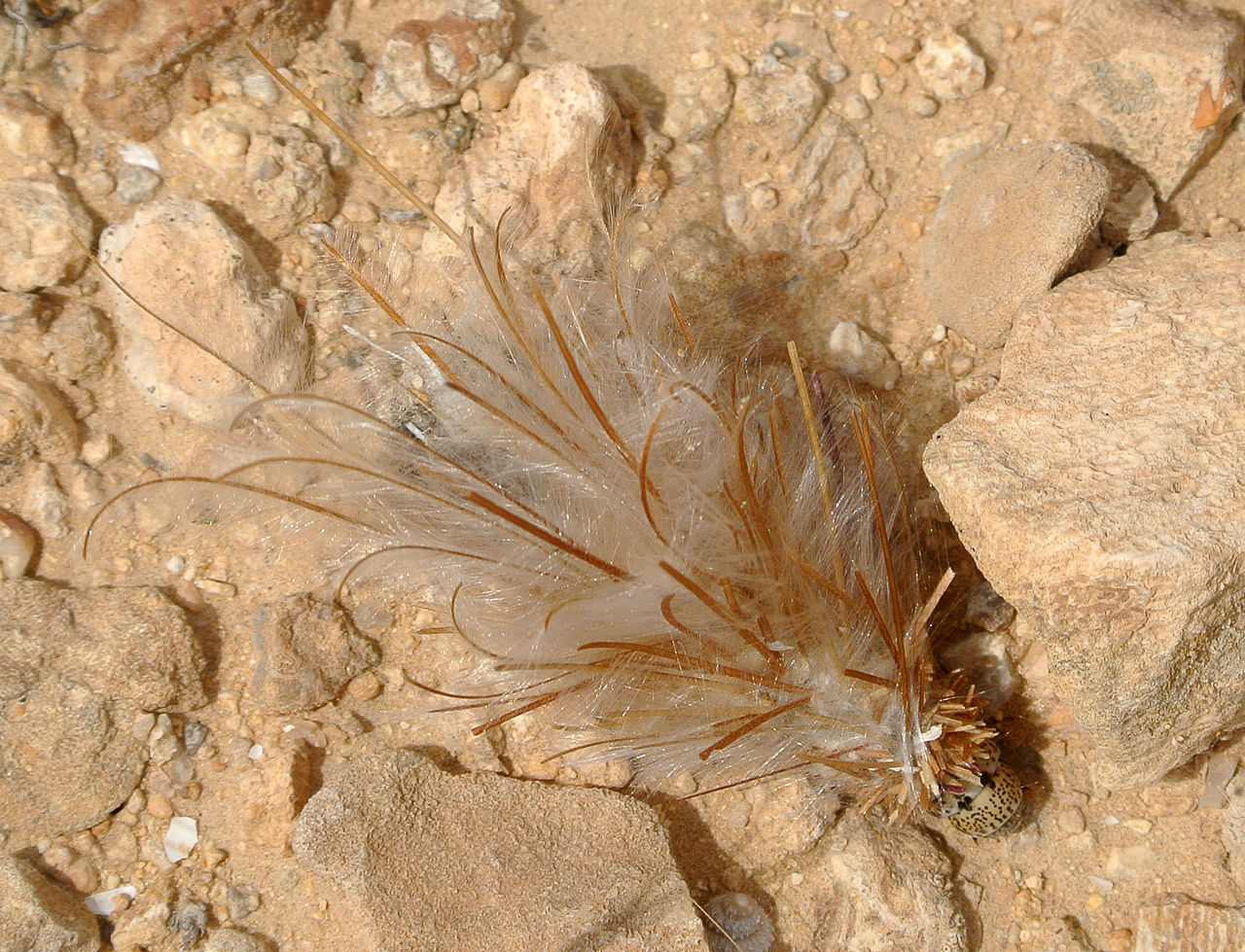
The caterpillar larvae of the Psychidae construct cases out of silk and environmental materials such as sand, soil, lichen, or plant materials. These cases are attached to rocks, trees or fences while resting or during their pupa stage, but are otherwise mobile.

Bagworm larva in the Negev (April 2014). Case is made mostly of feathery stork’s bill seeds.
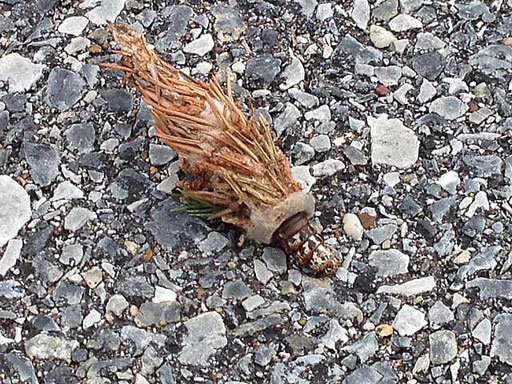
Bagworm cases range in size from less than 1 cm to 15 cm among some tropical species. Each species makes a case particular to its species, making the case more useful to identify the species than the creature itself. Cases among the more primitive species are flat. More specialized species exhibit a greater variety of case size, shape, and composition, usually narrowing on both ends. Since bagworm cases are composed of silk and the materials from their habitat, they are naturally camouflaged from predators. Predators include birds and other insects.

Image result for bag worms

Hapticans Practices; map making idea part 1

Hive Mind Value: Harmonious and Agelessly live on, the continuously existence of their species.

“I”= The hole Species

*Shiuan’s (Claire) Alien visuals

Poikilotherm

an organism that cannot regulate its body temperature except by behavioural means such as basking or burrowing.

Hypothalamas (Human organ)

16dcbde12e_hypothalamus-mayo.jpg

a region of the forebrain below the thalamus which coordinates both the autonomic nervous system and the activity of the pituitary, controlling body temperature, thirst, hunger, and other homeostatic systems, and involved in sleep and emotional activity.

Visually Juxtapose sensory needs to cover abilities of:

Communication
Smell, touch, taste,

*Activities, *Believes and Practice 

mapping, requiring energy

Maps out the future, then choose the “right” path to take

Raphael - The School of Athens - 1509
Raphael – Scuola de Atene (The School of Athens), 1509

The School of Athens is one of a group of four main frescoes on the walls of the Stanza (those on either side centrally interrupted by windows) that depict distinct branches of knowledge. Each theme is identified above by a separate tondo containing a majestic female figure seated in the clouds, with putti bearing the phrases: “Seek Knowledge of Causes,” “Divine Inspiration,” “Knowledge of Things Divine” (Disputa), “To Each What Is Due.” Accordingly, the figures on the walls below exemplify Philosophy, Poetry (including Music), Theology, and Law.[3] The traditional title is not Raphael’s. The subject of the “School” is actually “Philosophy”

– Wiki

Ritual and Practices

Ernst Heinrich

This slideshow requires JavaScript.

(German: [ˈhɛkəl]; 16 February 1834 – 9 August 1919[1]) was a German biologist, naturalist, philosopher, physician, professor, marine biologist, and artist who discovered, described and named thousands of new species, mapped a genealogical tree relating all life forms, and coined many terms in biologyHeinrich often travel and explore the world while collecting specimens for close inspection and analysation.


Philipp August Haeckel


Leonardo da Vinci


Sandmandala in Tibete

Millions of grains of sand are painstakingly laid into place on a flat platform over a period of days or weeks before ultimately being dismantled in order to release and disseminate the deity’s blessings into the world to benefit all sentient beings.

The Tibetan mandala is a tool for gaining wisdom and compassion and generally is depicted as a tightly balanced, geometric composition wherein deities reside.

The Sacred Art of the Sand Mandala
Mandala means literally “that which extracts the essence.”
There are many different types of mandalas used by Tibetan Buddhists. They can be created in either two or three dimensions.

According to Tibetan Buddhist history, the purpose, meaning and the techniques involved in the spiritual art of the sand mandala creation were taught by Buddha Sakyamuni in the 6th century B. C. in India.  Mandalas are created for rituals of initiation and for meditations; it is also created to purify the environment and its inhabitants to promote harmony in the world. A mandala represents the celestial mansion of a deity embodying the positive qualities that the practitioner wishes to cultivate through the practice. Each mandala is painstakingly assembled in layers of colored sand and can take 1-15 days to complete, depending on the size and amount of detail. Mandala creation is considered to be a form of meditation because it involves focused concentration and visualization of the deity. Simply seeing one of these mandalas is said to leave a powerful positive imprint in one’s mindstream.

Concept: when Hapticans reading and making the surface of the underground environment they are able to connect with the hole species, in thoughts and all.

http://www.namgyal.org/sand-mandalas/

Ajanta Caves

The Ajanta Caves in Aurangabad district of Maharashtra state of India are about 30 rock-cut Buddhist cave monuments which date from the 2nd century BCE to about 480 or 650 CE. -Wiki


Maori

Graphic Arts.Cities such as Dunedin have state-of-the-art public art galleries. All forms of graphic arts are practiced, and a national style has emerged, blending Maori and European elements. Training in traditional Maori carving has been widely taken up.

Read more: http://www.everyculture.com/Ma-Ni/New-Zealand.html#ixzz4eJobsqQ8
http://www.everyculture.com/Ma-Ni/New-Zealand.html

Hypothetically see Maori as the Aliens, they have depicted their understanding and also applied their beliefs on to this carving through the observation of grub. But if we see them as the humans site of view they can be the ones stealing or inspired by the creation of the grubs.

Like graffiti and the Maori carving of the grubs (Hapticans Practices; map making idea part 1 post), humans leave comments and depiction of what we perceived from our environment.


Prosthetic Limbs:

So we haven’t decided whether our alien has arms or not yet, but if they do I don’t think they’ll be very big as they’re for digging/crawling. I think prosthetic limbs could be an answer to how they developed they’re technology to the point where they could travel to earth through space. Prosthetic limbs that connect to the neural pathways through electromagnetic patches (much like todays latest human prosthetic) and allow the alien to construct and operate machinery or maybe the prosthetic are the machinery.

Image result for prosthetic technology

Touch and Textures:

An 1895 article published in the American Journal of Psychiatry had people rub 51 different cloths and report which type of materials felt pleasant to touch. And a 1937 study suggested that people find smooth and soft fabrics “relaxing.”

More recently in a 2012 study, 123 design students were asked to discuss the kinds of fabrics they liked to touch. The students disliked fabrics that were scratchy, rough or itchy; 41 percent mentioned wool. Coarse, bumpy or cold fabrics were also not popular.

The positive properties that cropped up most often were soft, smooth and warm (some of the runners-up were silky, fuzzy and fluffy). Silk, cotton, and fleece got the highest rankings. The students frequently used emotion-laden words to explain their partialities, such as cozy, cuddly, safe and comforting.

“Cognitive touch properties become more meaningful and memorable when they are linked with effective properties, which combine to satisfy physiological and psychological needs,” the researchers wrote.

It’s interesting to find that universally humans prefer soft, fluffy and warm textiles, I wonder if that has anything to do with the way we’re treated as infants. If our alien has always lived in the ground, we could make the assumption that it prefers warm, dry and crumbly textures. For example dust, dirt, roots, stone even, but once introduced to earth, would they find our textiles appealing? I think they would like muslin and whatever potato sacks are made out of, its got that rough earth feel. They’d need something to protect them from the damp earth.

An example of sensory disorder:

“Most of my things are about touch, usually textures. When it comes to eating any type of soggy bread is a big no-no, I usually avoid sandwiches/subs and burgers because some kind of sauce or oil could have soaked into the bread. Even touching it will make me gag let alone putting it in my mouth, which then I wouldn’t even be able to make myself swallow the food. Bread or croutons dipped in soup, cookies dipped in milk type things absolutely gross me out just by looking at them because ill feel/imagine the texture in my mouth. Cant do ‘soft chunks’ of foods: chunks in salsa or pasta sauces with tomato, onion etc chunks. Mushrooms raw or cooked, cooked onion is the worst feeling after the soggy bread…

I cannot stand wet hair, it grosses me out to touch or to feel my hair being touched by someone else while wet. Anything that feels rough/dry/cracked or bumpy I cannot help but pick at/rub over constantly. I avoid some types of… dry feeling fabrics? It feels uncomfortable to touch softer paper napkins/kleenex and after using them I have to rub my fingers together or on something else to get rid of the feeling. Sometimes I get the feeling in my mouth as if i was chewing on napkin, grinding it between my teeth… and that’s just not a pleasant feeling haha. Takes forever to get rid of the sensation. Whispy, fluffy types fabrics, like cotton balls or cotton stuffing, those foam mats you put over your mattress are all veryyyy unpleasant.” – source

Misophonia:

Misophonia, literally “hatred of sound,” was proposed in 2000 as a condition in which negative emotions, thoughts, and physical reactions are triggered by specific sounds. It is also called “select sound sensitivity syndrome” and “sound-rage.”

Maybe of our alien doesn’t make much noise, it has a hatred of other sounds, this condition is quite rare in the human populas, but came up while I was researching reactions to different textures. It turns out sufferers don’t actually have to hear the sound trigger, just seeing someone touch or do something that emits the sound can trigger a sufferer of misophonia, like imagining nails on a chalkboard or seeing someone rub bits of polystyrene together.


The Dark Crystal; anthropomorphic alien


The UrSkeks

The UrSkeks are the combined form of urRu and Skeksis. They are not native to Thra


http://www.darkcrystal.com/encyclopedia_urskeks.php


characterised by their tall, luminescent appearance, psychic abilities, and collectivist society. A group of non-conformist urSkeks, known as Fallen urSkeks, were banished from their homeworld to Thra during the planet’s first Great Conjunction. After nine hundred and ninety-nine and one trine of attempting to reform themselves, and influence the cultural development of Thra’s sentient races, the urSkeks sought to purify themselves through the power of the Great Crystal during the second Great Conjunction. In so doing, each of the Fallen urSkeks inadvertently divided themselves into two separate beings; the violent, materialistic Skeksis, and the gentle, contemplative urRu.

The urSkeks were tall, upright beings with a light of inner beauty[3] which would turn dark when angered.[1] They had powerful psychic abilities, being able to telekenetically construct edifices and heal injuries.[2][4]

“We must master our darker nature. That is what it means to be urSkek.” — Unnamed urSkek.

UrSkek culture, which the Fallen urSkeks themselves claimed to be “ageless”, was rigidly collectivist,[1] with deviant behaviour deemed “heresy”, and punishable by exile.[2] The urSkeks percieved space and time as essentially triangular, and this was reflected in their art and architecture.[3]

Little is known of the urSkek homeworld, other than the fact that it was “far beyond the farthest star”,[2] that it was born of a crystal like Thra, and that it vaguely resembled the Castle of the Crystal’s Hall of Reflection.[1] Other than the urSkeks themselves, the planet was inhabited by Garthim-like sea creatures.[3]


They were not evil, neither were they completely neutral. They harbored conflicting natures; both peaceful and aggressive, creative and destructive. Because of this, they were seen as outcasts amongst their peers. Exiled to Thra, the urSkeks sought to use the Crystal of Truth, the heart of this world, to purge themselves of these impurities.

The urRu

enc_urru_inset_1_210px
urAc the Scribe

The urRu, the peaceful, passive counterparts to the Skeksis, came into existence when the light of the Crystal of Truth shined upon the urSkeks during the Second Great Conjunction and divided the urSkeks into two beings. While the Skeksis were rapacious, whimsical and cruel, the urRu, dubbed the “Mystics” by the Gelfling, were creative and healing creatures. Each was linked to a Skeksis opposite; whatever fate one suffered, the other suffered the same. Immediately after the urSkeks split, confused fighting erupted and two Skeksis (and therefore two urRu) were murdered.

After the division, it was the Mystics who took on the sorrows of the world. Although they had inherited the mystical wisdom of the urSkeks, they were powerless to use it outside their own valley, since the division robbed them of their ability to act.

enc_urru_inset_2_580x280px
urRu concept drawing by Brian Froud

drawings of representations of astrological charts, Mystic hieroglyphs, crystalline rock formations, symbolic weaving and knotwork, priestly garments, sand paintings, elaborately carved walking sticks and totems, alchemical symbols, floor plans, murals, styles of stonework, cave interiors, exotic species of fauna, and countless other details.

enc_urru_inset_4_580x280px
Valley of the Stones

Valley of the Mystics
the Mystics slowly made their way to a nearby valley to contemplate their fate. They used their magic to speak to the stones of the valley, etching spirals on them that formed an impenetrable ward, which the Skeksis and their maleficence could not penetrate.


enc_urru_inset_5_210px
Dream spirals of an urRu coat

Artefacts

The pattern underlying the elaborate dream spirals of the urRu coats had significant meaning:

  • the geomantic pattern known as the Tree of Life was obtained through the process of dream-etching; it clearly underlies the design of all coats.
  •  meticulous work with the technique of phase matching showed that the apparently random abrasions on urRu prayer sticks were, in fact, a form of Ogham script, which, when taken as a whole, provided a description of and guide to the Tree of Life.

The tree consisted of seven aspects of the life of the spirit (in a hexagon with one central member) placed over a macrocosm of four elements of the physical world (an inverted triangle, again with a central member). The urRu lived in the coats and through the pattern of their coats; as their souls ascended the Tree of Life, their bodies were wrapped in the emblems of its branches.

The death blanket of the urRu, laid over the bodies of the dying, its blend of somber and vivid colors and the rigid geometrical patterns, symbolized the end of life and constrained the wanderings of the departed soul. It is the only urRu artifact that bears no spirals, for its wearer’s dreams are beyond control. The Great Conjunction symbol lies at its heart and three conjunctions guard the corners.

enc_urru_inset_7_580x280px
urUtt the Weaver
enc_urru_inset_8_580x280px
Brian Froud concept drawing showing detailing on Mystic faces

Costumes
The magic garment worn by each Mystic – half coat, half horse blanket – had to be carefully individualized. Colors, fabrics, decorations – all had symbolic functions. For urSol the Chanter, a coat of padded and ruched velour was decorated with motifs representing musical tones. The garment of urUtt the Weaver, on the other hand, was twisted and knotted from strands of raw fiber, while urNol the Herbalist was provided with a dark leather-like coat embellished with concentric figurations. Then each garment had to be artificially aged so that it would seem as ancient as the Mystics themselves.


urRu / Skeksis Pairs

  • urSu the Master / skekSo the Emperor
  • urSol the Chanter / skekSil the Chamberlain
  • urIm the Healer / skekUng the Garthim Master
  • urZah the Ritual Guardian / skekZok the Ritual Master
  • urTih the Alchemist / skekTek the Scientist
  • urYod the Numerologist / skekShod the Treasurer
  • urAc the Scribe / skekOk the Scroll-Keeper
  • urNol the Herbalist / skekNa the Slave-Master
  • urAmaj the Cook / skekAyuk the Gourmand
  • urUtt the Weaver / skekEkt the Ornamentalist
  • urSen the Monk / skekLach the Collector
  • urVa the Archer / skekMal the Hunter
  • urMa the Peacemaker / skekVar the General
  • urGoh the Wanderer / skekGra the Conqueror
  • urLii the Storyteller / skekLi the Satirist
  • urSan the Swimmer / skekSa the Mariner
  • urHom / skekHak (the second pair to die after the urSkeks split)
  • urYa / skekYi (the first pair to die after the urSkeks split)

http://darkcrystal.wikia.com/wiki/UrSkek

Energy

Humans eat for energy.

there is chemical potential energy in food, which goes into our body which then gets converted into stored electrical energy in all living cells that will be used for kinetic energy to make our muscles move; heart beat, lungs breath etc etc. But also will get converted into heat and even a little bit of sound energy.

every energy gets lost to heat eventually since the increased movement of particles is what creates heat, which is why shivering is a natural reflex to cold. (x)

My question is, what if you didn’t need to source energy from food/chemical potential?

The idea is that the aliens can source energy from outside kinetic forces, convert the kinetic energy into stored electrical energy and then use that electrical energy to move their muscles (which creates more kinetic energy) but will also create heat and a little bit of sound.

IMG_7529

I imagine that they’d collect this energy through their skin, maybe with many tiny muscles that absorb vibrations and turn that kinetic energy into electrical potential energy in their cells.

That means, to gain energy, they have to be in constant motion through dirt or through the air, being in the wind could be a rich source of energy and being touched by others could be too.

it means that being petted could be as indulgent to them as it is for us to eat a big meal.

IMG_7490


Skin

Materials that absorb heat without becoming hot

sensible heat materials –
according to Adam Paxson, a PhD candidate in MIT’s Mechanical Engineering department, there are phase change materials (PCMs), latent heat storage materials that absorb and release heat without rising in temperature themselves.

http://engineering.mit.edu/ask/are-there-materials-can-absorb-heat-without-becoming-hot


– Claire Huang

Biological influences

My current vision for our ‘Alien’ is based off a worm or snake simply as a starting point to generate more questions and ideas about the physiology of the creature.

if our creature has no eyes or sense of sight, has touch as a primary sense and digs underground, then what might it look like?

Also why is it subterranean? – My understanding was that the aliens are that way in order to be as non-human as I could think

Something that is ‘alien’ is something that is foreign, unknown and unlike what we know we know best… which is ourselves.

Every living thing on earth shares a similar biological structure because we all come from common ancestors. The similarities can easily be seen when comparing bone structures.

Image result for arms fins wings


It’s very hard to simply imagine entirely new physical structures since all things designs have some kind of basis in reality. And I can’t help but look to existing life forms when drawing inspiration for a new life form…

When imagining something subterranean, I imagine worms and moles, and I theorise that our alien would have evolved to the point where it doesn’t have sight and instead relies on touch, sound, presence, vibrations and temperature.

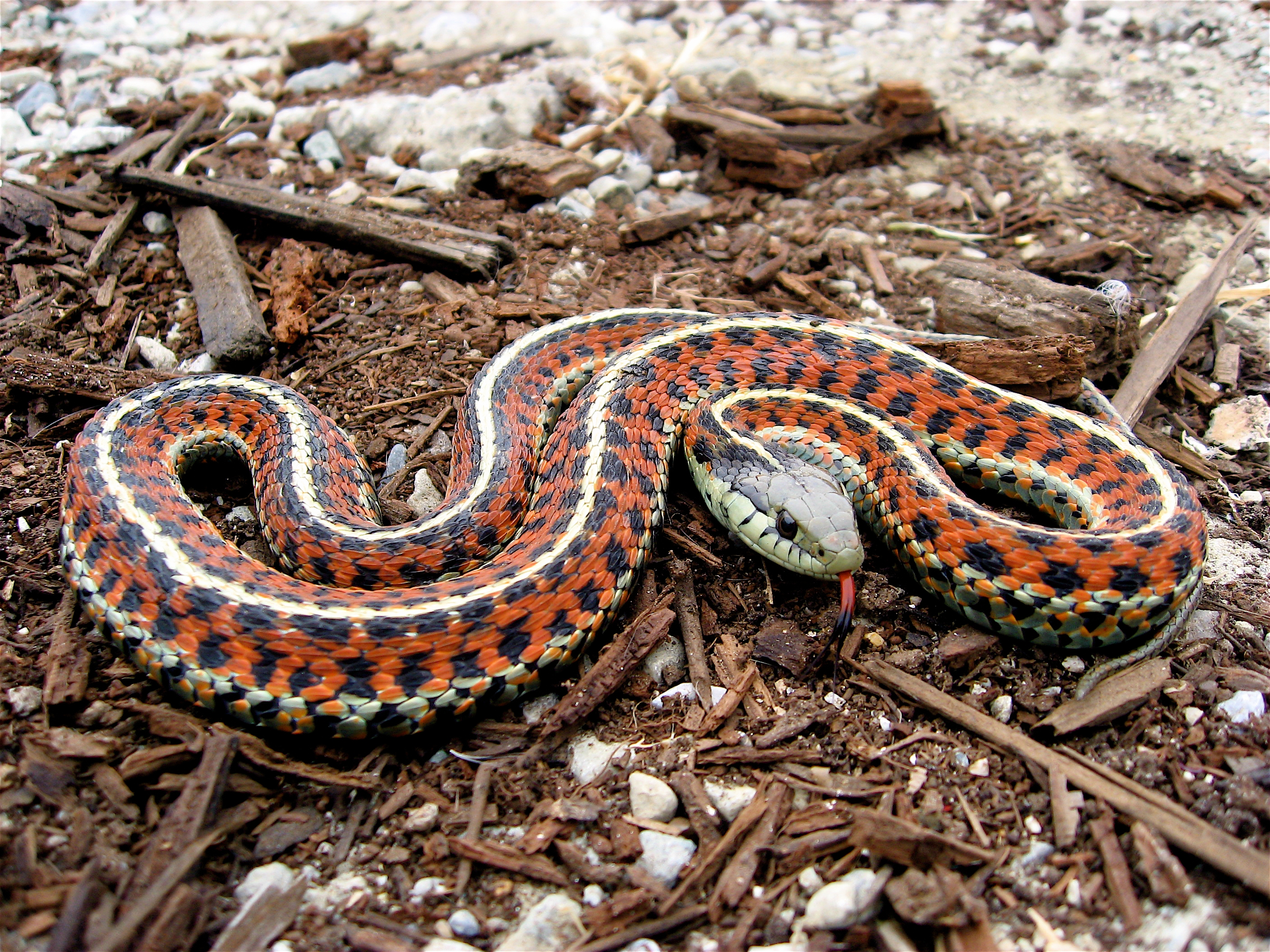
Image result for snake

Although they aren’t blind, snakes have some crazy senses, like being able to hear through vibrations on their skin, and smell with their tongue and jacobson’s organ

Image result for jacobson's organ

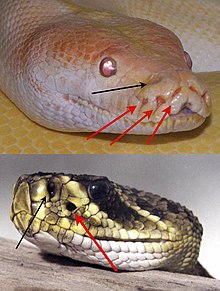
Some snakes can also sense temperature with organs called heat pits, which are openings on their face located around their mouth….

Image result for heat [pits Image result for heat [pits

They’re similar to the pores in shark skin mentioned in Claire’s previous post. I do have to question the size of the holes though, if our alien naturally digs then perhaps the organs can open and close to prevent dirt getting trapped there, or have a cleaning system like how eyes have tears.

IMG_7493

If touch is the primary sense, it makes me imagine some kind of feelers like a moth or something.

If they dig around in tunnels they could have huge antennae that run the length of it’s body so it can be constantly feeling the interior walls.

and if it pops out to the surface it could use the feelers to check the area for any other lifeforms or elemental effects.

IMG_7494

The long feelers very much remind me of the king of saxony bird of paradise, which is a bird that has evolved through sexual selection to have these big impractical plastic-like feathers by its eye. They’re used to attract mates but are easily tangled in branches and if they’re broken it will ruin the bird’s mating season. the feathers do regrow every year however.

Image result for king of saxony


Our alien, if they don’t have a visual sense, will not care about the look of their feelers, but may care about their texture.

another creature with feelers is the moth. Moths can “smell” pheromones through hair like fibers on their feelers.

Image result for moth feelers what they doIMG_7496

lastly is an influence that isn’t exactly a real world influence, the idea came to mind when Claire was brainstorming ways that the creatures would dig.

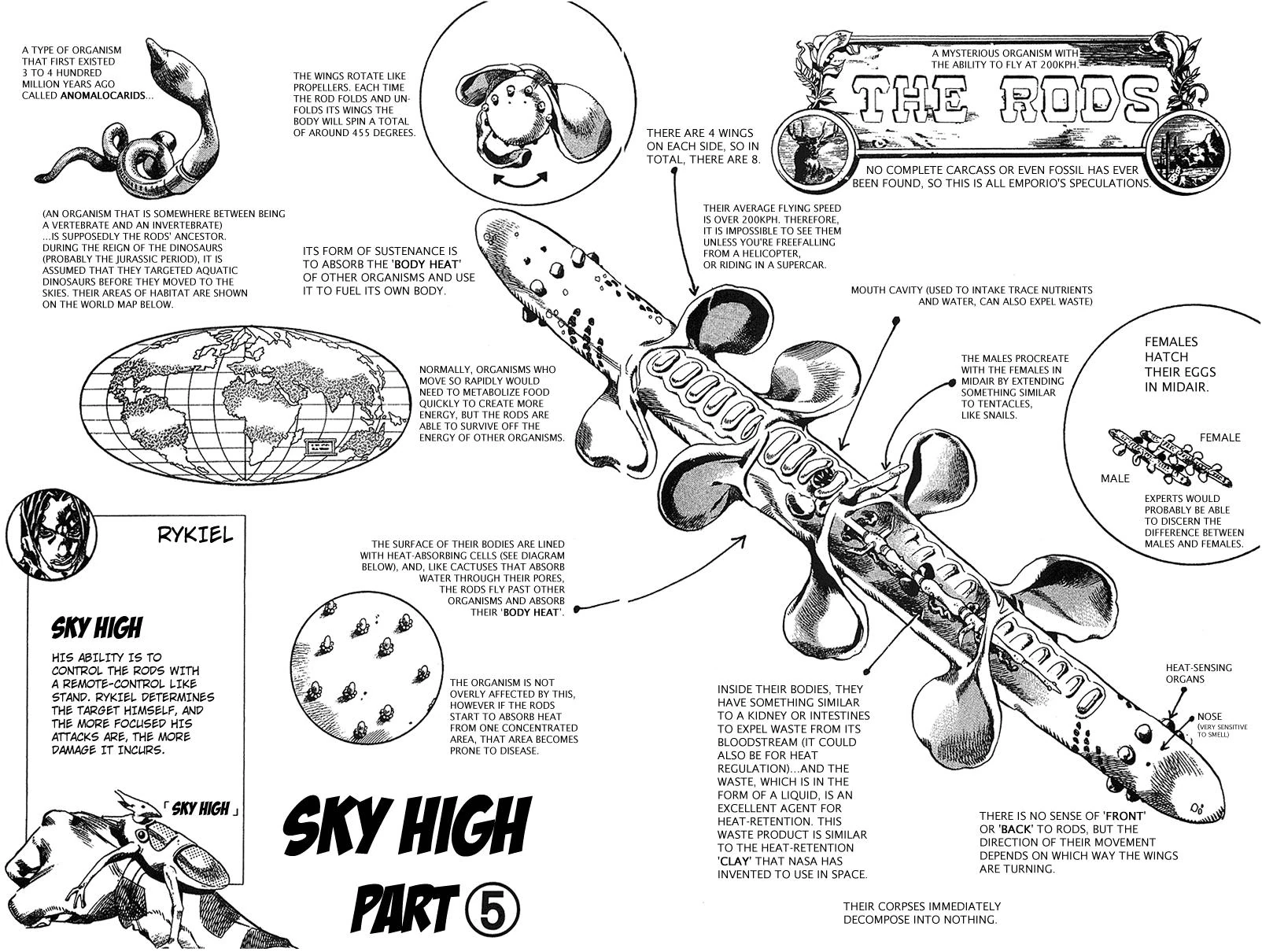
Her suggestion reminded me of skyfish/rods (Which are just basically bugs in flight cause on a slightly long camera exposure)

Image result for rods skyfish

People have interpreted them in different ways. eg: an illustration by Hirohiko Araki in Jojo’s bizarre adventure…

Image result for jojo skyfish

but I thought the wavy ‘fins’ could be a bodily mechanism to carry dirt away and behind the body…

IMG_7495

IMG_7487

The lack of eyes is kind of a problem because part of me wants to draw cute aliens, but eyes contribute a lot to cuteness… the heat pits end up replacing the eyes and at first glance make it look like it has a some what typical ‘face’, but it’s a trick.

not that the vision-less aliens will care about whether their heat pits make them look cute, but if they ever did interact with humans, we might be able to relate to them a little bit, just because they have things that look like eyes.


Design a site like this with WordPress.com
Get started